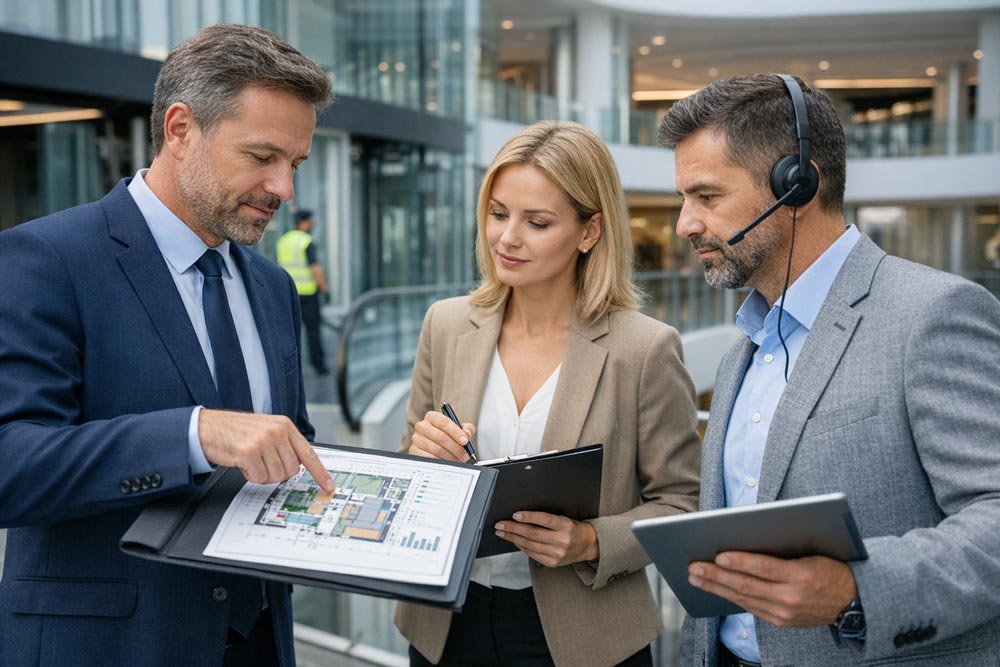
The profitability of a commercial property is determined not only by its location or architecture. A key role is played by the management system, which shapes the economics of the property throughout its entire life cycle.
Commercial real estate management begins with an analysis of the property concept. It is important to define its market positioning: the building format, target tenant audience, and structure of commercial spaces. A properly developed concept helps create sustainable rental demand and ensure stable occupancy.
The next stage is property commercialization. This includes developing the leasing policy, selecting tenants, and building a balanced tenant mix. A high-quality tenant pool affects not only income levels, but also the property’s market reputation.
Operational management covers day-to-day work with tenants, control of contractual obligations, and cash flow management. At this level, rental income stability and operational transparency are formed.
Property operations are equally important. Engineering systems, building maintenance, security, and service directly affect tenant comfort and the long-term competitiveness of the property.
The final element of the management system is asset development and transformation. The commercial real estate market is constantly changing, so the property must adapt to new business formats and tenant requirements.
This integrated management approach is what makes commercial real estate a sustainable investment instrument.
Commercial real estate management begins with an analysis of the property concept. It is important to define its market positioning: the building format, target tenant audience, and structure of commercial spaces. A properly developed concept helps create sustainable rental demand and ensure stable occupancy.
The next stage is property commercialization. This includes developing the leasing policy, selecting tenants, and building a balanced tenant mix. A high-quality tenant pool affects not only income levels, but also the property’s market reputation.
Operational management covers day-to-day work with tenants, control of contractual obligations, and cash flow management. At this level, rental income stability and operational transparency are formed.
Property operations are equally important. Engineering systems, building maintenance, security, and service directly affect tenant comfort and the long-term competitiveness of the property.
The final element of the management system is asset development and transformation. The commercial real estate market is constantly changing, so the property must adapt to new business formats and tenant requirements.
This integrated management approach is what makes commercial real estate a sustainable investment instrument.